



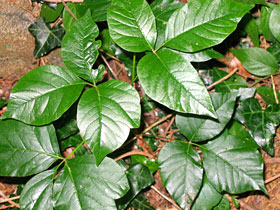
 Memorial Day gardening sent me to the shower ... twice. First, to remove soil smudges and sweat from planting annuals in 90-degree heat. The second time, 20 minutes later, following several surprise encounters with vigorous poison ivy (Toxicodendron radicans, formerly Rhus) emerging from unnoticed nooks and crannies.
Thought I'd spotted every visible PI plant when spraying with herbicide that morning! Missed the 2-foot-wide and tall cluster BEHIND the huge pot containing a purple-leaved Ninebark shrub. I lifted, turned, and carried that pot. So chances were good that PI leaves touched the pot surface and left oily sap that rubbed onto my shirt and legs.
Mumbling, I cursed urushiol, the allergenic oil that turns smooth skin into maddeningly itchy red rashes. Poison ivy is the plant that keeps on giving -- via specs of resin on bed sheets, shoes, gloves -- long after the first rash is gone. I hurried into the house to begin my usually successful poison ivy antidote.
Memorial Day gardening sent me to the shower ... twice. First, to remove soil smudges and sweat from planting annuals in 90-degree heat. The second time, 20 minutes later, following several surprise encounters with vigorous poison ivy (Toxicodendron radicans, formerly Rhus) emerging from unnoticed nooks and crannies.
Thought I'd spotted every visible PI plant when spraying with herbicide that morning! Missed the 2-foot-wide and tall cluster BEHIND the huge pot containing a purple-leaved Ninebark shrub. I lifted, turned, and carried that pot. So chances were good that PI leaves touched the pot surface and left oily sap that rubbed onto my shirt and legs.
Mumbling, I cursed urushiol, the allergenic oil that turns smooth skin into maddeningly itchy red rashes. Poison ivy is the plant that keeps on giving -- via specs of resin on bed sheets, shoes, gloves -- long after the first rash is gone. I hurried into the house to begin my usually successful poison ivy antidote.
The Cleanup
First thing is to carefully remove clothing -- in this case, clean shorts, shirt, and socks. I say "carefully" because each piece is likely contaminated with urushiol oil, which spreads at a touch. Immediately into the wash they go with hot water and heavy-duty laundry detergent. This will eliminate spreading the oil to furniture, other clothing, skin ... anything. Next step is removing urushiol from the skin as quickly as possible. The U.S. Department of the Interior recommends washing exposed skin with soap and cool water within 30 minutes of exposure -- before the urushiol penetrates the skin's outer layer. Don't use warm water because it opens the pores and can speed the penetration of the urushiol. A reaction to poison ivy sent me to hospital in the past, so I've developed the 5- to 10-minute routine of Wisk laundry detergent and cold water for me and my tools. After spotting poison ivy within arm's or leg's reach, I run for my bottle of full-strength Wisk laundry detergent to slather on any exposed body part. After thoroughly soaping up, I rinse with cold water, and do the same with pruners, cultivators, any tools in hand. (Why Wisk? I had an accidental discovery eight years ago after extensive exposure to PI while weeding for a friend. Wisk was the only detergent she had. I washed thoroughly with it and only got a couple itchy dots. Whew! Wisk is now my constant gardening companion, always in my work bucket.)
Avoid This Plant
What does poison ivy look like? Three-pointed green leaves on one red stem is the typical form. Botanically, it's one leaf of three leaflets. BUT PI's leaf color and shape vary as the plant ages. Young leaves are small and shiny, older leaves huge and dull. So best to follow the adage: "Leaves of three, let it be." Who gets poison ivy? Estimates range from 60 to 90 percent of people. One source reports that 90 percent of American adults will get PI if exposed to an amount of urushiol smaller than a grain of salt. Unfortunately, urushiol is long-lived and potent. There are reports of it crystallized in ancient fossils, and of people getting contact dermatitis from 100-year-old herbarium specimens. Scratch, scratch.
