

Introduction
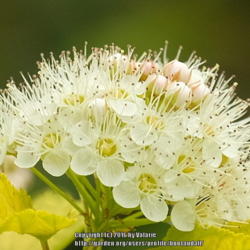
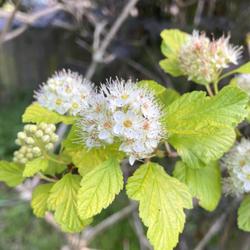
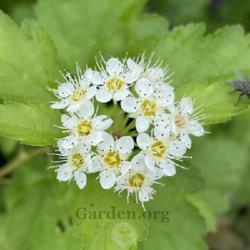
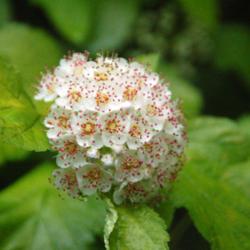
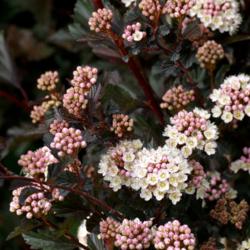
A deciduous shrub with attractive foliage, peeling bark and corymbs of white cup-shaped flowers.
About ninebarks
Ninebark grows 6 to 10 feet tall and wide, in zones 2-8. The white , cup-shaped flower heads are attractive to birds, bees and butterflies. Ninebark is drought tolerant, requires little maintenance and is suitable for xeriscaping.
Special features of ninebarks
Dart's golden ninebark (Physocarpus opulifolius 'Dart's golden') - is a more compact shrub with light striking yellow spring foliage fading to a chartreuse yellow-green in summer. It has showy white flowering clusters in early summer and fantastic golden-orange fall color.
[url="http://garden.org/plants/view/78313/Ninebark-Physocarpus-opulifolius-Diabolo/"]
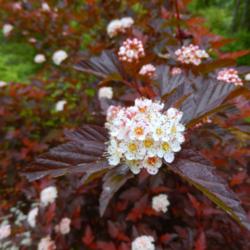
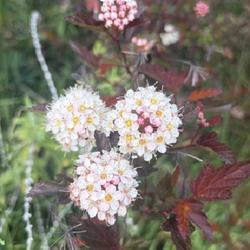
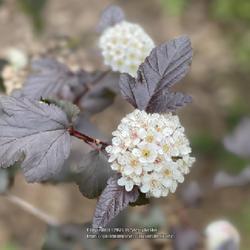
Diabolo ninebark (Physocarpus opulifolius 'Monlo')[/url] is well known for its rich purple foliage. Its white flowers in late spring to early summer blooms make a distinctive visual contrast to the dark purple foliage (shown in photo).
Choosing a site to grow ninebarks
Ninebark grows best in acidic, well-drained soil in full sun to partial shade, but is adaptable to many soil conditions.
Planting Instructions
Prepare the garden bed by using a garden fork or tiller to loosen the soil to a depth of 12 to 15 inches, then mix in a 2- to 4-inch layer of compost. Dig a hole twice the diameter of the pot the plant is in. Carefully remove the plant from its container and place it in the hole so the top of the root ball is level with the soil surface. Carefully fill in around the root ball and firm the soil gently. Water thoroughly.
Ongoing Care
Water regularly until established. After it's established, ninebark is drought-tolerant. You can propagate from hardwood cuttings. Established shrubs require annual pruning to maintain their shape. Prune early each spring by removing some of the oldest branches by cutting them off at the base. Do not ingest this plant, as all parts of the ninebark are known to be poisonous.
Frequently Asked Questions about Ninebarks
Which ninebark should I buy, and how big will it really get?
Mature size is where most disappointment with this shrub begins, because nursery labels are often optimistic and the plant is not.
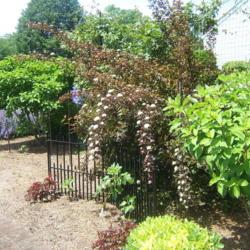
The straight species, Physocarpus opulifolius, grows 8 to 10 feet tall and about as wide, with green leaves, clusters of small white flowers in late spring, and golden-tan bark that peels in the way the introduction above describes. The older purple-leaved cultivars such as 'Diabolo', also sold as 'Diablo', reach 7 to 9 feet tall and wide at maturity rather than the 5 or 6 feet many labels claim, which is the single most useful thing to know about them.
Gold-leaved selections stay smaller and grow more slowly. 'Dart's Gold' settles at 4 to 5 feet and 'Amber Jubilee' at 5 to 6, which keeps them in proportion on an ordinary suburban lot. True dwarfs such as 'Little Devil', sometimes sold as 'Mindia', and 'Coppertina' genuinely stay 3 to 4 feet. Other dark-leaved selections run anywhere from 5 to 8 feet depending on the cultivar; 'Schuch's Red' is a dark one with better disease resistance than the older selections.
Choose by the size you actually want. If you want a compact shrub, buy a true dwarf and accept 3 to 4 feet; do not buy something that can reach 7 feet and expect pruning to hold it at 4. That mismatch is what leads people to shear a ninebark into a ball, which ruins its arching form and starts years of decline.
My ninebarks get powdery mildew every year and nothing seems to stop it
Powdery mildew is the signature ninebark problem, and how badly a plant suffers depends heavily on which one you bought. The dark-leaved selections are far more susceptible than the green species or the gold cultivars. 'Diabolo' and many older dark selections mildew chronically in humid regions and in gardens where air sits still. Newer dark selections bred in the last decade do better, with 'Schuch's Red' notably more resistant than 'Diabolo'. The golds, 'Dart's Gold' and 'Amber Jubilee' among them, stay much cleaner, and the dwarfs such as 'Little Devil' and 'Coppertina' are generally trouble free. If a whole planting mildews severely year after year despite good care, the cultivar itself is usually the reason, and replacing the worst plants with a resistant selection solves what spraying cannot.
The disease shows as a white coating on new foliage, worst as the air turns humid in late summer and early fall. Affected leaves rarely die, but the shrub looks disfigured and may shed leaves early and end up sparse.
The disease also behaves differently from most garden fungi, which is why the usual advice misleads. Powdery mildew does not need wet foliage to infect: it prefers moderate temperatures, humid air and shade, and strong sun and heat suppress it. That makes siting your first line of defense. Give plants full sun with morning light and moving air, leave space around them, thin crowded stems, and avoid planting against walls, into corners, among denser shrubs, or in low pockets where air stagnates.
Treatment only works as prevention. Once leaves are coated, no spray restores them; the aim is to protect new growth from the point the shrub leafs out, repeating through the season as the label allows. Choose a fungicide labeled for powdery mildew on ornamental shrubs and follow its label directions, including any warning about applying in heat, since several materials used for this disease scorch foliage on a hot day. Rake up fallen leaves and prunings and dispose of them rather than composting them, since they carry the fungus into spring. A resistant cultivar in a well-aired site accomplishes far more than any spray program.
How do I prune a ninebark?
Ninebark flowers on old wood, meaning the buds form on branches that grew the previous year. Everything about pruning follows from that.
The right method is renewal pruning at the base. Each year, after flowering or during winter dormancy, take out several of the oldest, woodiest stems entirely, cutting them at or near ground level. That opens the center to light and air, removes dead and damaged wood, and draws vigorous new shoots from the base. Done consistently it keeps the shrub youthful, keeps it flowering, and improves the air circulation that keeps mildew down.
What ruins the plant is shearing it into a tight ball or hedge each summer. Shearing removes the tips of all the new growth, which is precisely the wood that would carry next year's flowers, and it builds a dense twiggy shell that traps dead leaves and moisture inside, which is ideal for fungal problems and pests. After a few years of it the shrub is bare and woody in the middle, flowers less and less, and looks unnatural even freshly cut. Recovering from that takes several seasons of proper renewal pruning.
An overgrown or badly sheared plant can be cut back hard, nearly to the ground, in late winter or early spring, and an established root system pushes out vigorous new growth that rebuilds the shrub within a season or two. Treat that hard reset as something you do every few years, not annually. A shrub planted this season needs no pruning at all beyond removing damage.
Deer chewed my ninebark out of shape. Can I cut it back?
Yes, and ninebark takes it better than most shrubs. It is naturally a little loose and scraggly, so browsing damage looks worse than it is, and the plant regrows readily from the base.
Do the real work in late winter or early spring, the normal pruning window. For the winter view you can tidy away the longest and most awkward stems now and leave the structural cutting until the dormant season, using the renewal approach above rather than shearing the outline. Going into its first winter, mulch several inches deep over the root zone, held clear of the stems, and keep the soil evenly moist until the ground freezes.
How far from a fence should I plant one?
Allow about four feet. Ninebark matures roughly as wide as it is tall, so planting tight against a fence leaves you no access to maintain the fence and puts the back of the shrub in still, shaded air where mildew settles in.
Treat the dimensions on a nursery label as a guide rather than a promise, since they often describe a plant kept trimmed. A shrub set near a fence leans out toward the light at first and evens up once its top clears the fence line. If you need it smaller than its natural size, plan on taking the longest branches out at the base each spring, or hard renewal pruning every few years, rather than shearing.
I just planted one and it is dropping leaves and browning at the edges. Is it dying?
Probably not. A shrub planted into summer heat commonly sheds some lower leaves and scorches at the leaf margins even when you water attentively. That is transplant shock, and most plants come through it and look normal the following season.
The trap is that these same symptoms, lower leaf loss and browning edges, also appear when a plant is getting too much water. Saturated soil starves roots of oxygen, and the leaves yellow and drop, so watering harder in response to a stressed plant can be exactly the wrong move.
Water by checking rather than by schedule. Push a finger into the soil at the root zone and water only when the top inch or so feels dry, then water deeply rather than sprinkling daily, which builds deeper roots. If the plant came out of a container, remember that the potting mix and the surrounding native soil dry at different rates, so check both. Water thoroughly, wait several hours or overnight, then dig in with your fingers to see how far it actually soaked; most people are surprised. Cool weather, rain and lower light all cut the water requirement, and a plant in partial shade needs less than one in full sun all day.
Spread 3 to 4 inches of decomposed bark, shredded leaves or compost over the root zone to steady soil moisture and buffer temperature, pulled back a few inches from the stems, since mulch held against the bark keeps it damp and invites rot at the base.
My new ninebark did not flower this year. What went wrong?
Nothing, most likely. Ninebark flowers on wood that grew the previous season, so a first-year transplant frequently produces no flowers at all while it builds a root system and settles in. Expect flowers the following year on a plant that is otherwise growing well.
Resist the urge to feed it into flowering. In average or better soil, no fertilizer is needed. If you want to give it something, topdress with compost in early spring or apply a balanced granular feed such as 10-10-10 at the label rate, and stop there. A lightly fed ninebark generally grows better and resists disease better than a well fed one, because excess nitrogen produces soft lush growth that pests prefer and fungi colonize easily.
How can I tell whether my ninebark survived the winter?
In spring, a ninebark can look like a bundle of dead sticks and still be perfectly alive. Because it is deciduous, bare branches in late fall and early spring are normal, not a symptom.
Test the wood. Starting at the tip of a stem and working downward, scrape a very thin slice of bark away with a fingernail or knife. Green tissue underneath means live wood that will break into growth. Wood that is brown or tan all the way down its length, and that snaps cleanly when bent gently, is dead and can be removed.
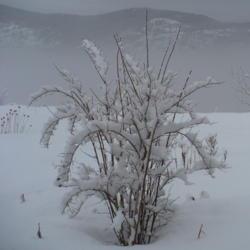
Even when every above-ground stem is dead, the roots are usually alive, particularly under mulch, and buds at ground level swell and break in spring and early summer to regenerate the whole shrub. Snow insulates the root zone and the base of the plant well, which is why a hard winter that kills the top rarely kills the plant. This is one of the virtues of a hardy native shrub.
For a newly planted shrub, spread 3 to 4 inches of bark mulch or shredded leaves over the root zone before the ground freezes. Established plants need nothing further. Do not build wooden frames or wrap the shrub in burlap or cloth: those coverings trap heat during warm winter spells and disrupt dormancy, and they do more harm than the cold they were meant to prevent.