

Introduction
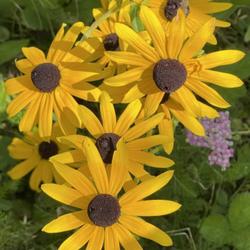
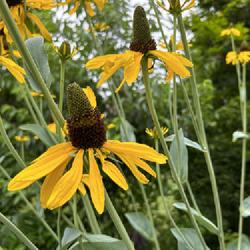
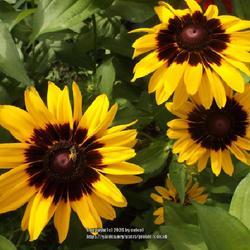
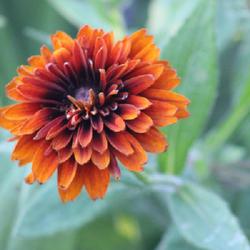
Rudbeckias are easy-to-grow perennials featuring golden, daisylike flowers with black or purple centers, and include the popular black-eyed Susan.
About black eyed susans
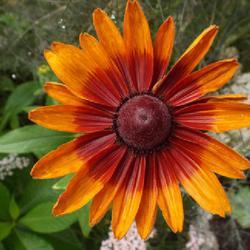
Rudbeckia's bright, summer-blooming flowers give the best effect when planted in masses in a border or wildflower meadow. Some species also have attractive gray-green foliage. In general, rudbeckias are relatively drought-tolerant and disease-resistant. Flower colors include yellow and gold, and the plants grow 2 to 6 feet tall, depending on the variety.
Special features of black eyed susans
Easy care/low maintenance
Multiplies readily
Good for cut flowers
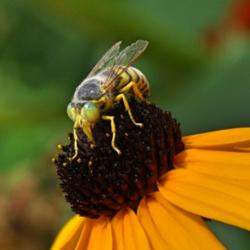
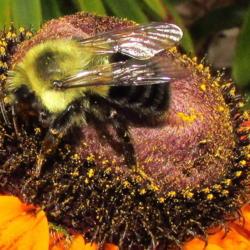
Attracts butterflies
Tolerates dry soil
Choosing a site to grow black eyed susans
Select a site with full sun to light shade and well-drained soil.
Ongoing Care
Apply a thin layer of compost each spring, followed by a 2-inch layer of mulch to retain moisture and control weeds. Water plants during the summer if rainfall is less than 1 inch per week. After the first killing frost, cut stems back to an inch or two above soil line. Divide plants every 3 to 4 years as new growth begins in the spring, lifting plants and dividing them into clumps.
Planting Instructions
Plant in spring, spacing plants 2 to 3 feet apart, depending on the variety. Prepare the garden bed by using a garden fork or tiller to loosen the soil to a depth of 12 to 15 inches, then mix in a 2- to 4-inch layer of compost. Dig a hole twice the diameter of the pot the plant is in. Carefully remove the plant from its container and place it in the hole so the top of the root ball is level with the soil surface. Carefully fill in around the root ball and firm the soil gently. Water thoroughly.
Frequently Asked Questions about Black Eyed Susans
Which black eyed susan do I actually have?
Three quite different plants are sold under this name, and the difference decides whether a plant should come back at all.
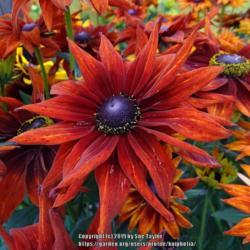
- Rudbeckia hirta. The one most often sold in flower in garden centers through summer, and the one raised from seed as a bedding plant. It is a short lived species, behaving as an annual in most gardens and as a biennial in some. It flowers hard, sets seed, and dies. Named forms such as Indian Summer, Cherokee Sunset, Prairie Sun, Cappuccino, and the Toto series are all hirta, and none of them is a reliable perennial.
- Rudbeckia fulgida, usually the variety sullivantii and usually the cultivar Goldsturm. This is the genuinely perennial black eyed susan. It spreads slowly into a wider clump each year, is hardy to around zone 3, and is the plant to buy if you want the same clump twenty years from now.
- Thunbergia alata, the black eyed susan vine. Completely unrelated, a tender twining annual with orange flowers and a dark eye, grown in baskets and up strings. It dies at the first frost everywhere that has one, and it is meant to.
Other genuinely perennial members of the group are worth knowing: Rudbeckia laciniata, Rudbeckia subtomentosa, Rudbeckia maxima, and Rudbeckia triloba, which is another short lived one that persists by seeding.
How to check what you bought: the pot label carries the botanical name somewhere, often in small type on the back. Failing that, the plant itself gives it away. Rudbeckia hirta is bristly and roughly hairy all over, with a fairly upright, sparsely branched habit and large flowers on long stems. Rudbeckia fulgida is smoother and darker green, spreads outward into a mat of basal foliage that stays green late into fall, and carries smaller flowers in far greater numbers.
I have planted black eyed susans four springs in a row and they never come back. What am I doing wrong?
Four years in a row is the most useful detail in the question, because it rules out bad luck. Something systematic is happening, and there are only three realistic candidates.
The most likely answer is that they were never going to come back. If you have been buying plants in flower in summer, you have almost certainly been buying Rudbeckia hirta, and a hirta that has flowered its heart out through August is at the end of its natural life. It is not dying of the winter. It is dying of having finished. Nothing you do in fall will change that. The test is simple: buy one plant in spring that is explicitly labeled Rudbeckia fulgida var. sullivantii, ideally Goldsturm, put it in a sunny, reasonably drained spot, and see what it does. If that one comes back and the others never did, you have your answer.
The second candidate is winter wet. Rudbeckias of every kind tolerate cold far better than they tolerate sitting in saturated ground while dormant. Heavy clay that stays wet from November to March rots crowns, and the plant that looked fine in October is simply gone in April. If your soil puddles after rain, plant into a raised bed or a slope, work grit and compost in before planting, and avoid anything that holds water against the crown. Which leads to a correction of advice that circulates widely and does real damage in a wet garden: do not pile compost, leaves, or anything else over the crown of the plant for winter. That is sensible for a marginally hardy plant in a dry cold climate, and it is actively harmful in a wet one. A mound of damp organic matter sitting on the crown holds moisture exactly where you least want it. Mulch around the plant instead, keeping a hand's width clear of the center. Rudbeckias are hardy well beyond most of the country and do not need the protection in the first place.
The third candidate is fall tidying. Cutting everything to the ground the moment it browns removes the two things that keep a black eyed susan planting going. It removes the seedheads, which is how hirta renews itself, since it self sows freely and the seedlings you would find next spring are the real replacement plants. And it removes the standing stems that trap snow and leaf litter over the crown. Leave the stems and seedheads up over winter. Goldfinches strip them through the cold months, they look good under frost, and you cut them down in early spring instead.
Two smaller possibilities worth ruling out if none of the above fits: voles work under snow and under mulch, and a plant that vanished without trace over winter with a neat hollow where it used to be was eaten rather than frozen. And Rudbeckia hirta seedlings in spring are small rosettes of coarse, bristly, oval leaves that look enough like a weed that people hoe off their own replacement plants without a second thought.
For a planting that genuinely persists, plant fulgida for the permanent clumps and let hirta seed itself around between them, and you get both the reliability and the taller flowers. Divide the perennial clumps every three or four years, because the center of an old clump goes woody and flowering falls off. Do not overfeed; rich soil and heavy nitrogen produce floppy stems that need staking.
Can I dig a piece out in June and pot it up to give away?
Yes, with two adjustments, but check which plant you have first because it changes the method entirely.
If it is the perennial, Rudbeckia fulgida, division is the right approach and it works well. The ideal times are early spring, as growth begins, and early fall, when the soil is still warm and the heat has broken. Midsummer, with the plant in bud or in flower, is the hardest moment to move anything, because the plant is running its root system flat out to support the top growth and you are about to remove most of the roots. You can still do it if you make one change that the standard advice usually leaves out: cut the top growth back by half to two thirds before you divide. You are sacrificing this year's flowers on the division, and that is exactly what lets the reduced root system keep up with the reduced leaf area. A full sized division in flower with its roots cut off will wilt, brown, and often die. The same division cut back hard establishes without much drama.
The method:
- Water the parent plant thoroughly the day before. A hydrated plant in moist soil comes apart far better than a dry one, and the root ball holds together.
- Have the pots ready before you dig, filled with moistened potting mix, so nothing sits with bare roots waiting.
- Take from the edge, not the middle. Push a spade straight down at the outside of the clump and lift a wedge with roots and shoots attached. You do not need to dig up the whole plant, and the parent barely notices.
- Make sure every piece has both roots and growing points. A fistful of roots with no shoot and no bud will not regrow, and a shoot with no roots is a cutting rather than a division.
- Pot at the same depth it was growing. Burying the crown is the commonest way to lose a division. Firm the mix gently around the roots and water until it runs out of the bottom.
- Keep the pots in shade for a week to ten days, out of wind, and evenly moist but not sodden. Then move them into a brighter spot for another week before they go into the ground.
- Plant them out in their new garden as soon as convenient, ideally within a couple of weeks, and water them through dry spells for the rest of the first season.
If it is the annual or biennial Rudbeckia hirta, do not bother dividing it. It makes a single crown with a fibrous root system that does not split into viable pieces, and even a successful division will be dead by next year anyway. Give something that will actually work instead. Seed: leave a few flowerheads to dry on the plant until they are brown and crumbly, rub the seed out into an envelope, label it, and hand that over; it germinates easily, and sown in spring it flowers the same year. Or self sown seedlings: in spring, lift the small rosettes that come up around the parent plants with a trowel and a plug of soil, pot them, and grow them on.
For the journey, water the pots, let them drain, then bag the pot or stand it in a box so the mix stays in. Never leave potted divisions in a closed car in the sun, which cooks roots in less than an hour. Set expectations honestly: a summer division will sulk, may not flower again this year, and will look unimpressive for a few weeks, then come away strongly the following spring. Label the pot with the name and, if you know it, the cultivar, because the difference between a hirta and a fulgida is the difference between a gift for one year and a gift for twenty.
How do I keep an established planting healthy?
Deadheading. Removing spent flowers through summer keeps both types blooming for weeks longer. Stop in late summer and let the last flush set seed, which feeds the birds and, for hirta, provides next year's plants.
Powdery mildew. Rudbeckias are prone to it in late summer, particularly in still air and after a dry spell. It is disfiguring rather than fatal. Space plants for airflow, water the soil rather than the foliage, and water in the morning. Clear and dispose of the affected foliage at the end of the season rather than composting it.
Leaf spot. Brown or purple angular blotches spreading up from the lower leaves are usually a Septoria type fungus, and it hit Goldsturm plantings widely enough to have made the horticultural press. The same measures apply, along with dividing crowded clumps and cleaning up debris in fall.
Aster yellows. If flowers come out deformed, leafy, and green rather than yellow, this is a phytoplasma disease spread by leafhoppers. There is no cure. Dig the affected plant out, bag it, and put it in household waste rather than the compost heap, so it does not act as a reservoir.
One plant to plant deliberately rather than by accident. Rudbeckia laciniata, especially the double form sometimes called Golden Glow, spreads by underground rhizomes and can take over a border. If something labeled black eyed susan is running through your garden rather than dying out of it, that is the likely identity.
A word on handling. Rudbeckia hirta is covered in stiff bristly hairs, and some people come up in an itchy rash after an afternoon of cutting it back. Gloves and long sleeves solve it. None of these plants is a food plant, and the seed is for birds and for sowing, not for people.
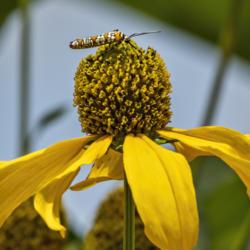
Small striped larvae crawled out of the black eyed susans I cut for the house. How do I keep them out?
Rudbeckias are excellent cut flowers, and this is the one drawback: the dark central cone is a sheltered, seedy place, and small caterpillars and larvae feed and hide inside it. You rarely see them in the garden, and they only become obvious on the kitchen counter an hour after the vase is filled. They are a nuisance indoors rather than a threat to the planting, and they are not worth spraying for. A spray would also be the wrong tool here, since these flowers draw butterflies and pollinators, and the plants themselves shrug off the damage.
The simple fix is water. As soon as the flowers are cut, put them head first into a deep container of cool water and leave them submerged for about ten minutes. Anything living in the cone lets go and floats to the top, and you can tip the water out onto the ground away from the house before arranging the stems.
The tidiest way to do this is to carry the container into the garden with you and drop each stem in flower end down as you cut, so by the time you have finished cutting the flowers have already had their soak. If you would rather not carry water around, fill a sink or a bucket indoors and give the whole bunch the same treatment before it reaches the vase. Either way, shake the stems gently as you lift them out, and give the cone a look before the flowers go into the arrangement.