

Herbs pay triple dividends in flavor, fragrance, and good looks. The magic of freshly chopped basil over tomatoes, the Mediterranean charm of rosemary and thyme, the intoxicating aroma of lemon verbena - these rewards need not end when the garden shuts down for winter. Even without a sunny windowsill, a few pots of herbs under grow lights will supply you with wonderful flavors from fall through spring. This guide explains how to start herbs indoors from seed, care for them through winter, protect tender perennials by bringing them in before frost, and keep them productive year-round.
Why Grow Herbs Indoors?
For most gardeners, the fresh herb harvest ends with the first hard freeze. But some herb plants can survive the winter indoors, providing summer flavor for months. Others can be overwintered in the garden and brought back to life in spring. Still others thrive year-round under lights. Growing herbs indoors is not about matching the outdoor garden's abundance; it's about having a few choice herbs in reach of your kitchen when they matter most - in the dead of winter, when the taste of fresh basil or thyme is most welcome.
Which Herbs Grow Well Indoors?
Not every herb likes indoor life. Success depends partly on light and partly on the herb's growth habit. Annual herbs that must be harvested whole (like dill and cilantro) will force you to resow every few weeks for continuous supply, but they are reliable performers. Perennial herbs such as rosemary, thyme, and oregano grow more slowly but reward you with months of harvests once established.
Excellent for indoors:
- Basil (especially compact 'Spicy Globe', 8 to 10 inches tall)
- Chives ('Grolau' variety is bred for forcing)
- Mint ('English' spearmint, less invasive, broader leaves)
- Oregano (Greek oregano has the truest flavor; 8 to 12 inches tall)
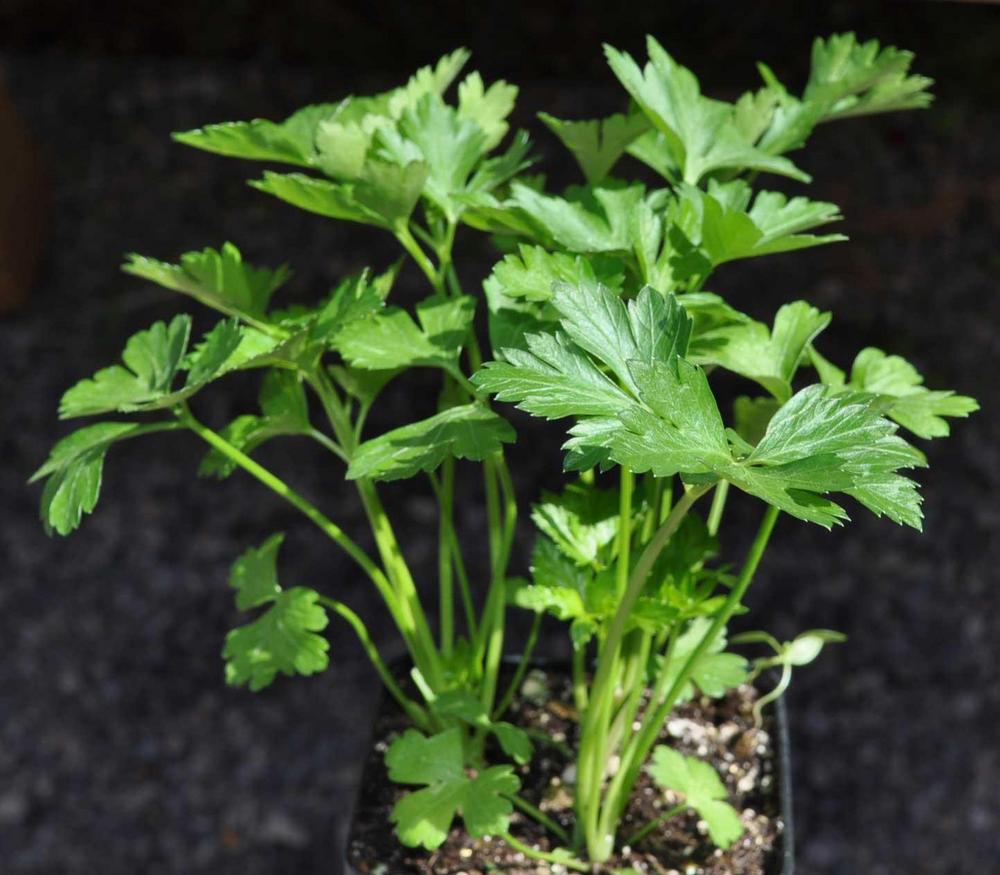
- Parsley (best brought from garden as established plants; thick taproot supports new growth indoors)
- Sage (dwarf 'Compacta' cultivar, 10 inches tall, more compact than standard varieties)
- Thyme (broadleaf thyme and Cuban oregano, 10 to 12 inches tall, never goes dormant)
- Rosemary (dwarf 'Blue Boy' cultivar, more compact at 24 inches; standard varieties are tall and slow to adapt)
Possible but slower:
- Dill ('Fernleaf' dwarf cultivar only; standard dill grows too tall indoors)
- Cilantro (short-lived; reseed every 3 to 4 weeks for continuous supply; takes up space)
Not recommended for resowing indoors: Do not expect dill or cilantro to set seeds indoors - the effort does not repay the yield.
Special cases:
- French tarragon and chives benefit from a cool dormant period: when growth flags in winter, place them in an unheated shed or garage (freezing temperatures are fine) for one to two months, then return to room temperature and good light for a burst of new growth.
- Vietnamese coriander (not true coriander, but a good substitute) regrows after cutting, unlike true cilantro, and reaches only 4 to 8 inches tall.
- Stevia (Stevia rebaudiana) requires seedlings rather than seed; keep plants cool and soil slightly moist.
Light: The Critical Factor
Windowsill reality. Herbs are sun worshipers, Mediterranean natives that demand bright light. The light coming through a window, even in winter from a south-facing pane, is often less than one-tenth of outdoor summer light. A typical bright but overcast day is about 1,000 foot-candles; a bright summer noon is 10,000 foot-candles. Indoor light rarely exceeds 500 foot-candles even at the brightest window.
Herbs do not tolerate north-facing windows or any window receiving less than four hours of direct sunshine daily. Even with four hours of direct sun daily, most indoor herbs will slow or stop growth during winter unless you provide supplementary lighting. When growth slows, reduce harvests and hold back on water.
Grow lights: Fluorescent. Home and school gardeners have used fluorescent lights for decades to start seeds and grow herbs. Because their light intensity is low, they work best for low-growing plants and seedlings with leaves no more than 8 inches from the tube. A standard 4-foot unit with two 40-watt tubes will light an area about 8 inches wide.
- At 6 inches below the tube, fluorescent lights deliver about 700 foot-candles.
- At 12 inches below, light drops to about 450 foot-candles.
- Efficiency is 60 to 80 lumens per watt.
A combination of standard cool-white and warm-white tubes is effective. Specialty tubes such as Verilux (approximating natural light) or Vita-Lite "power twist" (producing somewhat more light per watt with balanced spectrum) are available but optional. Keep the lights on 12 to 14 hours per day for best results.
Grow lights: High-Intensity Discharge (HID). Commercial fresh-herb growers and serious gardeners rely on HID lamps, which produce far greater light intensity. The bulb can sit several feet above plants and still deliver adequate light even to lower leaves.
- A 400-watt HID lamp delivers about 1,000 foot-candles 3 feet below the bulb and can sufficiently illuminate 25 square feet.
- Metal halide lamps produce light good for healthy growth and flowering (120 to 130 lumens per watt); bulbs run from 150-watt to 1,000-watt.
- High-pressure sodium lamps are most efficient (140 lumens per watt), producing reddish light less pleasant to work under but sometimes preferred for flowering plants.
- Electricity cost is $4 to $8 per month depending on lamp size and local rates (operating during off-peak hours reduces cost).
Acclimating plants to lower light. Plants produce different leaf types in response to light levels. High-light leaves are thick and narrow; low-light leaves are thin and broad. When a sun-loving plant is moved indoors, it cannot produce food efficiently with the wrong leaf type, so it sheds old leaves and grows new ones adapted to lower light. This transition can happen within days or weeks, and some herbs cannot adjust fast enough.
Rosemary is the classic case: it is a slow grower that often starves itself indoors by January or February, its leaves drying and the plant dying. To prevent this, gradually acclimate the plant to lower light by placing it in partial shade for two to three weeks, then deeper shade for another two to three weeks, before bringing it indoors. Once plenty of new growth appears, it is ready to move inside.
Containers, Soil, Water, and Fertilizer
Containers. Use individual pots for each herb so you can tailor care to each species. Containers must have drainage holes; waterproof saucers underneath prevent water damage. Bigger is better than too small for sustained growth. Plastic pots retain moisture longer than clay, reducing the need to water as frequently. A clever approach: pot each herb and "plant" the pots into a window box or large tray filled with soil up to the rim of the pots. This method keeps roots from becoming intertwined (allowing easy rearrangement), maintains even soil moisture and humidity, and prevents the small pots from drying out as fast, all while keeping plants from becoming potbound.
Soil and drainage. After light, proper soil is the next most important factor. Herbs require excellent drainage, especially in winter when transpiration rates are lowest. Use a commercial seed-starting mix or potting soil - never garden soil, which tends to be heavy and may harbor disease. To improve drainage without sacrificing nutrients, add sharp sand or perlite to a compost-based mix. Most culinary herbs do well in soil with pH 6 to 7.
Water. Water deeply but less often, only when the soil is actually dry to the touch. When the soil is dry, add water until it comes out the bottom of the pot. If water does not run out, the pot has a drainage problem: check that drainage holes are not blocked, and repot with better-draining soil if needed.
In winter, reduce watering frequency as plants grow more slowly. Use the finger method: poke into soil up to your second knuckle to check if it is still moist. You can also use the weight test: feel how light the pot is before and after watering, and learn to recognize the dryness point.
Fertilizer. A common misconception is that herbs grow better in poor soil. Outdoors, flavors are stronger in lean soil. But indoors in confined pots, supplementary feeding is necessary once the initial potting soil nutrients are depleted (usually within a few months). Feed actively growing herbs with a diluted liquid fertilizer or organic fish emulsion weekly during active growth, but not when plants are dormant or growing slowly. Use half-strength solutions to encourage gentle, steady growth.
Starting Herbs from Seed Indoors
Basic setup. For the best success, use a grow-light setup (as described above) rather than relying on window light. Place lights on a timer for 12 to 14 hours daily and keep lights 2 to 4 inches from the tops of seedlings for compact, sturdy growth.
Use seed-starting potting mix, which is lighter than regular potting soil and easier for tiny seeds to penetrate. Plastic trays with small cells are ideal: they let you start many herbs at once and group plants by growth requirements. Herbs that dislike transplanting (parsley, cilantro) should start in larger individual pots to minimize disturbance. Clay pots work but require more frequent watering than plastic.
Germinat ion. Place the tray or pots in a warm room, out of direct sun, and keep the soil moist but not waterlogged. If you can apply bottom heat with a heating mat, germination will be faster. Cover cells with clear plastic to retain moisture. Once seedlings emerge, remove plastic and place trays under lights.
After germination. Starting one week after germination, apply weekly light sprays of diluted liquid organic fertilizer to keep seedlings green and vigorous. Transplant seedlings into larger individual pots once they become too large for their starting containers. Harden plants off indoors (gradually expose them to air movement and temperature swings) before moving pots outside or planting them in the garden.
Seed-specific timing:
- Basil: Easiest to grow; germinates in 4 to 12 days in warm soil. Sow two seeds per cell and thin to the strongest. Transplant into 2-inch pots once true leaves form.
- Chives: Seeds self-sow readily in gardens, so germinate quickly: 10 days from sowing with evenly moist soil.
- Cilantro: Hates transplanting; sow in larger pots or peat pots that can move directly outdoors. Soak seeds overnight in warm water and sow 1/4 inch deep; germinate in 7 to 10 days.
- Dill: Big seeds, easy to handle; germinates within 1 to 2 weeks.
- Oregano: Small seeds taking weeks to germinate; gently press into soil and keep evenly moist. Watch for damping-off disease if soil is too wet.
- Parsley: Notoriously slow, taking up to 4 weeks; soak seeds overnight and sow 1/4 inch deep. Grow in pots large enough to move directly to the garden, as it dislikes transplanting.
- Sage: Like parsley, slow germination (up to 21 days); keep soil evenly moist.
- Thyme: Tiny seeds; avoid overplanting by mixing with sand. Gently place a few seeds per cell and lightly press into soil; germination takes 2 to 3 weeks. Watch for damping off.
Bringing Garden Herbs Indoors for Winter
You can enjoy tender perennial herbs such as rosemary and biennial herbs such as parsley all winter long by potting them up before frost and bringing them indoors.
The process. Select small to medium-sized herb plants from the garden rather than the largest ones - the transplanting process destroys many roots, and smaller plants survive the shock better. On a cool, cloudy day, water plants well and dig them carefully, keeping the soil around the roots intact. Pot them into containers sized appropriately for the root ball.
Check plants carefully for any pests and spray the leaves with horticultural oil or insecticidal soap to eliminate hitchhiking insects before moving indoors.
Hardening off indoors. Place newly transplanted herbs in a shady spot outdoors for one to two weeks to recover from transplant shock, protected from wind and cold. Container herbs that have grown in full sun all summer should also be moved into shade at this time. The shock of lower indoor light is severe, so acclimating them outdoors in shade for a few weeks beforehand eases the transition.
Once acclimated and before a hard freeze arrives, bring all herb plants indoors and place them in a sunny, south-facing window. Check one more time for any insects that may have hitched a ride.
General indoor care for overwintered herbs. Water sparingly and do not fertilize. Most herbs will grow slowly or not at all indoors in winter. Harvest what you need, but leave some leaves for the plant to survive. You will see plants rebound in late winter when stronger light levels and longer days return.
Per-herb overwintering notes:
-
Chives, oregano, mint, thyme: These hardy herbs can spend winters indoors in pots to provide fresh leaves while snow flies, then return outdoors in spring to be planted in the garden. French tarragon and chives in particular benefit from a cool dormant period: when growth flags, place them in an unheated shed or garage (or even the refrigerator) for one to two months; freezing is fine. When returned to room temperature and good light, they will produce succulent new growth.
-
Parsley: Dig established parsley plants in fall with as much of the root system as possible intact. Pot them in deep containers and water well. Leave them outdoors in a shaded area for a few weeks to recover. Once revived, bring indoors before a hard freeze and place in a sunny window. You should harvest fresh parsley leaves all fall and early winter. However, by late winter the leaf quality will decline as the plant prepares to flower. At that point, compost it - parsley is a biennial that will produce a flower stalk in spring and then die. Pick all leaves you want while you can.
-
Rosemary: Most rosemary varieties are hardy to USDA zone 7, perhaps even zone 6 with protection. In colder areas, bring plants indoors. Pot them up and allow time to adjust to container life. Bring indoors before a hard freeze and place in a sunny southern window. Rosemary likes cool temperatures (50 to 60 degrees F), high humidity, and barely moist soil in winter. Keep humidity high by misting often and placing the pot on a pebble tray filled with water. Water just enough to keep soil from drying out. Your plant may not grow much in winter, but it should survive to go outdoors again in spring. Plus, you will have the fragrance and taste of fresh rosemary in your kitchen all winter.
-
Taking cuttings: If space is limited, take 4- to 6-inch cuttings from rosemary, lavender, pineapple sage, and other woody perennial herbs. Dip cut ends in rooting hormone powder and stick into a pot filled with moistened vermiculite or sand. Cover the pot with a clear plastic bag with slits in it and keep in a warm, bright room out of direct sunlight. Once rooted, transplant into individual pots and grow under lights all winter. You will have fresh herbs and new plants to set out in the garden next spring.
Bringing seeds to harvest indoors. Some herbs readily self-sow in the garden and will do the same indoors with patience. Coriander and dill are reliable: collect seeds from fall plants and store in glass jars in a cool location. Sow them next spring, or allow them to drop naturally to the ground in your garden - they will sprout in fall or early spring depending on your location. In mild-winter areas you may have a continual supply throughout winter depending on the weather.
Pests and Diseases
Herbs grown indoors are susceptible to common houseplant pests: whiteflies, spider mites, aphids, mealybugs, scale insects, and thrips. Inspect plants regularly.
If your herbs are in portable containers, control pests by dipping the entire aboveground part of the plant into a pail of insecticidal soap. Swish vigorously for one to two minutes to wet all leaf surfaces (hold your hand over the pot to prevent soil loss). Repeat the dipping once or twice weekly for three to four weeks to clear up most problems.
For less severe infestations, spray or wash leaves periodically with plain water or with a diluted insecticidal soap. Avoid overhead watering in winter when leaves dry more slowly.
If you notice mildew on leaves, space plants further apart or use a small fan to improve air circulation and keep leaves dry.
Harvesting and Plant Productivity
The flavor of most culinary herbs is most intense in the morning, so harvest then when possible. Pinch back branching plants such as basil to keep them shrubby rather than leggy. Harvest herb leaves as needed for cooking, but leave some foliage for the plant to survive and recover.
For annual herbs like dill, you can harvest the whole plant, then reseed every few weeks for a continuous supply.
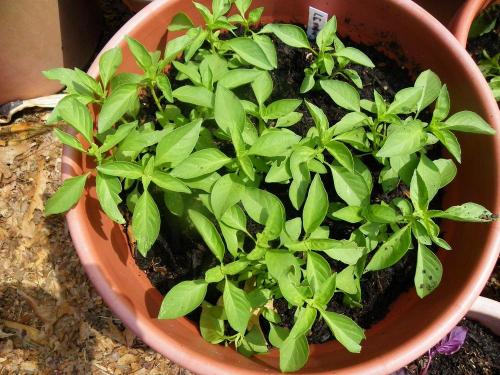
- Basil (Ocimum basilicum 'Lemon')
- Uploaded by Newyorkrita
With proper light, soil, water, and a little care, your herbs will grow strong through winter, providing fresh seasonings for your meals. Come spring, move plants outdoors into the garden, cut them back, give them fresh potting soil or garden amendments, and they will continue to flourish for many seasons.
