

Years ago, when I was a novice gardener living in the city and yearning for the country, I noticed a garden in a tiny front yard and complimented the elderly gardener on his beautiful basil. He gave me some seeds, which had come from his family in Sicily. Since then, my garden has never been without a generous planting of basil. Here in North Carolina, I grow it both to market to restaurants and for my family's use. No other herb is so exuberant and so useful. You may pick a sprig of rosemary or thyme, or a few fronds of parsley or dill, but you'll pick an armload of basil.
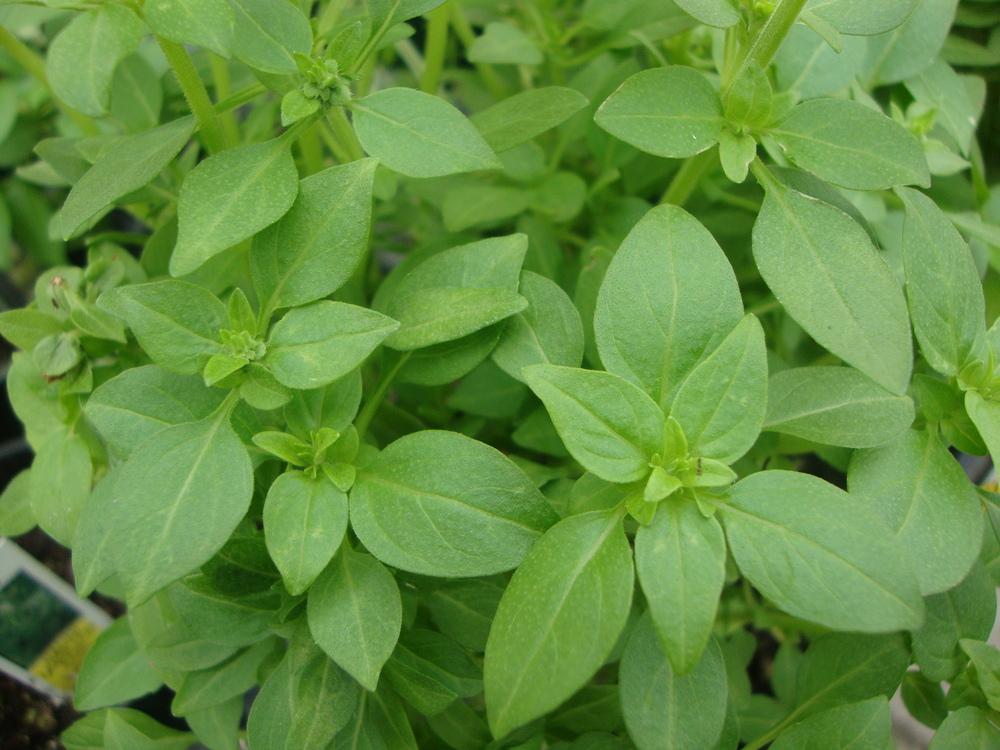
Start this tender annual indoors four to six weeks before you intend to set the plants out. Herb nurseryman Tom DeBaggio of Arlington, Virginia, recommends waiting until night temperatures are above 55°F and not mulching until the soil is thoroughly warmed up.
Basil likes a fertile soil, though it tolerates a wide range of pH (4.5 to 6.5). Although some folks insist that the flavor is better if basil isn't fertilized, grows and looks better if it's fed at planting time, and again during the season, perhaps after a heavy picking. Supplemental irrigation can double yields, Simon reports.
Like most herbs, basil has few pests. Japanese beetles can easily be kept off with spunbonded polyester row covers. If slugs are a problem on new transplants, try using a barrier of copper flashing.
A devestating disease, fusarium wilt of basil, reached North America via infected seed in the 1990s. Symptoms include sudden wilting and leaf drop, accompanied by dark streaks on the stems, usually in weather above 80°F. If you notice the symptoms, quickly dig up the infected plant, along with all soil around the roots, and discard it. If part of your garden becomes infected, avoid spreading the disease by moving soil around on your tools or tiller, and consider growing your basil in containers. You can also try your luck with a fusarium-resistant variety, such as 'Nufar'.
Basil is also susceptible to a few bacterial rots that show up on stems or leaf clusters, usually in cool, wet weather, in winter greenhouse production, or late in the season. Planting in well-drained soil, spacing plants so they dry out after they're watered, and practicing good garden sanitation are the keys to control.
Harvest and Storage
The optimum time to harvest basil is just before it flowers. Many fresh-market growers here in North Carolina like to pick just the tip clusters; stemless and succulent, these are preferred by restaurant buyers. But if you continually pick this way, your plants may start flowering almost simultaneously with new leaf formation. Basil is programmed to initiate flowering when it has six pairs of leaves on a stalk," says Tom DeBaggio," so I like to cut it back to two leaves per stem. Don't let it get past four pairs. You can harvest the entire plant about every three weeks, and at the end of the season there will be 12 to 24 lateral branches.
"In my own garden, I tend to follow a combination method: pinching off the top clusters for sale or home use, and then when the flowers are starting to get ahead of me, cutting the plants way back for a pesto- or vinegar-making session. I repeat this progression several times during the season.
Studies done at Michigan State University by horticulturist Diana Dostol have shown that basil actually keeps longest if it is picked as late in the day as possible. Dostol also worked on post-harvest storage. "If you simply put basil in a perforated plastic bag at room temperature," she says, "it will keep for 10 to 14 days." The optimum storage temperature is 60°F. "
At refrigerator temperature, which is about 41°F," says Dostol, "basil only keeps two to three days."I like to keep a few stems in a jar of water on the kitchen counter. They last a long time, they are right there when I need a few leaves, and they may conveniently root some plants for winter. "If you store basil stems in water," advises Dostol, "treat them like cut flowers, changing the water frequently. You can also add something like lemon juice to the water to bring down the pH and retard bacterial growth.
"Basil's bountiful production can be both a delight and challenge. In my family, when the lettuce is all gone, basil's not just an herb, it becomes our main leafy green. A midsummer salad consists of tomatoes, peppers, cucumbers and a huge handful of basil. Every year, I put bags or yogurt cups of pesto in the freezer and chip off chunks as needed for the ultimate winter convenience meal. I also make basil vinegar and dry the leaves for cool-weather cooking. Then basil's evocative summertime smell fills my house, and I can practically feel the sun on my back, hear the leaves rustling and taste the ripe tomatoes warm in the garden.
A Guide to the Culinary Basils
Ocimum basilicum includes a number of different basils most commonly used for cooking.
Sweet basil. Your basic basil, with large leaves and white flowers. The Genovese variety (names include 'Sweet Genovese' and 'Genovese' or 'Genova Profumitissima') is particularly nice, with a very pleasing flavor preferred for pestos. I've also found it a vigorous, luxuriant grower, slow to bolt.
Lettuce leaf. (O. b. crispum)A short, wide plant with thick, very crinkled leaves; slow to bolt. Other varieties include 'Mammoth' and 'Napoletano'; 'Green Ruffles' is similar. The flavor is sweet, and not as strong as the other sweet basils, making it especially good for tossing into salads. The leaves can also be used to wrap fish, chicken or a rice stuffing for grilling.
Dwarf or bush basils. (O. b. minimum)These shorter varieties ('Spicy Globe', 'Piccolo Verde', 'Fino Verde' or 'Fine Green') bear small, narrow leaves with a sweeter, less pungent smell than the large-leaf types. It sounds like a great nuisance to pick all those tiny leaves off, but actually the stems are quite soft and succulent, so that you can chop up the sprigs, stems and all. The delicate flavor tends to wash out in long cooking, so add the leaves at the end or use them raw.
Opal basils. These O. basilicum hybrids include 'Dark Opal' (a 1962 All-America Selections winner) and 'Purple Ruffles' (also an AAS winner in 1987). The purple varieties can be quite beautiful, but they are far less vigorous growers and there has been a noticeable falloff in the purpleness of both the above varieties since their introduction, with more and more green or piebald plants. Breeders have recently begun a reselection process to produce seed stock for more purely purple plants. 'Rubin', released in 1993, is a reselection of 'Dark Opal' for a more consistent dark coloration.
Exotic Basils. Some of these are Ocimum basilicum, some are other basil species, and some no one really knows for sure. One name can cover many quite different varieties. Some are available as seed; others only as plants.
Lemon basil. (O. b. americanum or alternatively, O. b. citriodorum). Generally has small, light green leaves and a distinctive lemony aroma. O. b. 'Mrs. Burns' is a more vigorous selection with larger leaves and a powerful lemon scent. Try it in pesto, salad dressings, sauces, fish dishes and desserts.
Licorice (or anise) basil and cinnamon basil. Handsome, tallish varieties of O. basilicum with dark foliage and flowers and distinctive spicy flavors. Cinnamon basil makes a good jelly.
Thai, East Indian, Puerto Rican and Cuban basils are among those gathered from other parts of the world, and often expressly suited to creating the flavors of their local cuisines.
Deborah Wechsler is a garden writer based in Pittsboro, North Carolina.
 Victory Seed Company has all the seeds you want for your best garden in 2024.
For 25 years, the family-owned Victory Seed Company has provided the highest quality vegetable, herb and flower seeds to families across the country. We are passionate about providing you the best seeds available that give excellent germination, robust plants, and the harvest you want. With a catalog of over a thousand varieties, we have everything, and our prices are the kinds that we'd want to pay. We have hundreds of yesterday's heirloom vegetables, as well as today's award winning hybrid selections. Get to know us by visiting our website and browsing through our online vegetable seed catalog.
